
Managing across nationalities in Dubai: what actually differs, and what does not

A team of twelve in Dubai routinely spans eight nationalities, three or four first languages, and four or five distinct assumptions about what a meeting is for. Managers arriving from a single-culture market ask for a country-by-country briefing: how to manage Indians, how to manage Filipinos, how to manage Emiratis.
That briefing does not work, and it is worth being clear about why before describing what does. The variation inside any national group is larger than the average difference between two groups — a Mumbai-raised engineer with a decade in London and a colleague from the same city who has never left have less in common professionally than either has with a peer from anywhere else in the same situation. And Dubai selects for people who are already adapted: most of the room has worked in mixed teams for years and has adjusted accordingly.
What survives that objection is narrower and more useful. A small number of dimensions genuinely predict friction, and two structural features of the Gulf labour market amplify all of them.
Three dimensions that actually matter
How disagreement is voiced
This is the largest single source of misunderstanding in a Dubai team, and the one with the greatest consequences.
At one end sit professional cultures where contradicting a proposal in a meeting is normal, expected, and read as engagement. Dutch, French, German and Russian workplace norms sit broadly here, and so does a good deal of engineering culture regardless of nationality. At the other sit cultures where public disagreement with a superior costs the superior face and the speaker standing — much of South Asia, much of Southeast Asia, and much of the Arab world, in different ways and for different reasons.
The practical failure is always the same. A manager from the first group presents a plan, invites objections, receives none, and concludes there is consensus. There was no consensus. There was an absence of a mechanism for saying so.
What to change: stop treating silence as data. The related failure — reading a quiet meeting as agreement — is the subject of what silence in a meeting actually means. Ask for objections in writing before the meeting, or in pairs during it, or from the most junior person first. All three cost about four minutes and change the information you get.
How visible hierarchy is expected to be
A manager who insists on first names, sits among the team and asks to be challenged is signalling accessibility. That signal is not read identically across the room.
For colleagues whose expectation is a visible hierarchy, a manager who declines the role does not become approachable. They become unpredictable — and where authority is ambiguous, the safe strategy is to do exactly what was last instructed and nothing more. The flat manager gets the compliant behaviour they were trying to avoid.
The reverse error is equally common. A manager operating with visible authority in a team of Western European professionals will be read as controlling, and the people best able to challenge a bad decision will stop.
What to change: be explicit about the register rather than assuming it transfers. Saying I want to be challenged in this meeting and it will not count against anyone is a sentence that has to be said out loud, and then demonstrated the first time someone tests it. The first test is the whole thing: the team watches what happens to the person who spoke.
How much context a message carries
Some professional cultures put the message in the words. Others put a substantial part of it in the relationship, the setting, and what was not said.
In a mixed team this produces two symmetrical complaints. One group finds the other’s communication blunt to the point of rudeness. The other finds the first group’s impossible to act on. Both are correct about the effect and wrong about the intent.
What to change: default to explicit for anything that matters, and write it down. This is the single highest-return habit in a multicultural team, because a short written summary of who decided what, by when, corrects simultaneously for indirectness, for hierarchy and for second-language comprehension. It is dull, it takes five minutes, and it prevents most of what this article describes.
Two structural factors that are not cultural
These get attributed to culture and are not. Both are specific to the Gulf, and both change behaviour more than any national difference on the list above.
Residency is tied to employment. For most of the people in the room, losing the job means leaving the country, moving children out of school, and in many cases interrupting the remittances that support a family elsewhere. This is not a background detail. It is the dominant fact of professional life for a large share of a Dubai workforce, and it makes disagreeing with a manager a materially riskier act than it is in a market with unemployment insurance and portable residency.
A manager who reads the resulting caution as passivity, or as a cultural trait, has misdiagnosed it. The behaviour is a rational response to the stakes. The only thing that shifts it is a demonstrated track record that raising a problem is safe — demonstrated, not stated, and over months rather than weeks.
English is a second language for most of the room. Not an obstacle for most purposes, but it produces one specific and expensive error: fluency gets read as competence. The colleague with the best English in the meeting is assumed to have the best grasp of the problem, and gets the visibility, the client contact and eventually the promotion. Sometimes that is correct. Often it is a measurement of schooling.
The corrective is to create channels where the language is not the filter: written input before a decision, small-group work, technical demonstrations. It is also the honest reason we state plainly which languages a session is delivered in — English, French or Spanish — rather than leaving a prospect to discover it.
Three things that need saying out loud
Perceived fairness is fragile in this market. Compensation practices in the Gulf have historically varied by nationality for the same role, and teams are entirely aware of it. A manager who cannot control pay bands can still control what they distribute: visibility, difficult assignments, client exposure, credit in front of senior people. Distributing those on any basis that correlates with passport is the fastest way to lose a mixed team.
The calendar is shared and not uniform. Ramadan shortens the working day and shifts energy to the morning. Colleagues observing it work alongside colleagues who are not. Diwali, Eid, Christmas, Chinese New Year and Orthodox Easter all land somewhere in a Dubai team, and the leave requests that matter most are the ones attached to families in another country — long, planned far ahead, and non-negotiable in practice. Plan the year around them rather than adjudicating them one by one.
Turnover is the norm, not a symptom. Careers here are shorter and more mobile by design. A team is a rotating group, which means knowledge has to live in documents rather than in people, and a manager’s induction process matters more than their retention rate.
What to do first
If you take one action: after every meeting where something was decided, write three lines — the decision, the owner, the date — and send them to the room.
It corrects for the colleague who could not say no, for the one who did not catch the fourth sentence, for the one who was waiting to be asked directly, and for the one who assumed the outcome was obvious from context. One habit, four failure modes closed.
The motivation side — which follows different rules again in a team where half the room is planning around a family in another country — is covered in motivating a multicultural team.
Frequently asked questions
Which nationalities work in Dubai?
The workforce is overwhelmingly expatriate — the figure commonly cited is close to nine in ten — with large communities from India, Pakistan, Bangladesh, the Philippines, Nepal and Sri Lanka, substantial Arab populations from Egypt, Lebanon, Syria and Jordan alongside Emirati nationals, and Western European, British, North American, African, Russian and Chinese communities. A single team of twelve routinely spans eight or more nationalities and three or four first languages.
Do I need to manage each nationality differently?
No, and attempting it produces worse results than not trying. Differences within a national group are larger than the average difference between groups, and applying a national template to an individual is stereotyping with a management justification attached. What works is adapting to observed behaviour on a few specific dimensions, which is a different exercise entirely.
Why do people agree in the meeting and then not deliver?
Usually because agreement was never given. In many of the cultures represented in a Dubai team, an outright no to a manager in front of colleagues is not available, so yes means the message was received. The correction is procedural rather than cultural: ask what would prevent this from working, ask for the plan back in the person's own words, and confirm in writing afterwards.
Does Ramadan change how a team should be managed?
It changes the working day, which changes what can reasonably be scheduled. Reduced hours apply, energy is lowest in the late afternoon, and colleagues who are fasting will be doing so alongside colleagues who are not. Move demanding sessions to the morning, avoid scheduling major launches into the final week, and ask rather than assume who is observing.
Training on this topic
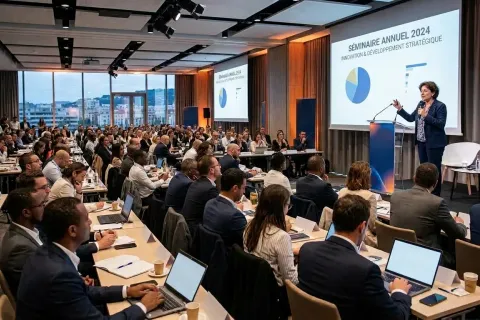
Seminars & team coaching
Team coaching programme
Where a seminar settles a question in two days, team coaching changes how a group works over four to six months. Several sessions with real work between them, aimed at habits rather than at a single decision.

Management
The manager-leader toolkit
The core management programme. Three days covering the work a manager actually does day to day — setting the frame, delegating, running one-to-ones, handling the conversation nobody wants to have. The third day comes a few weeks later, once the tools have met a real team.